
History



|
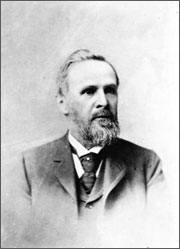
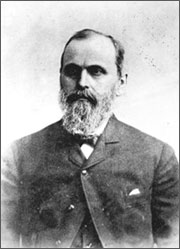
Founders |
|
 |
 |
| History of Pratt & Whitney - American Made Precision Machinery Since 1860 | |
| 1860 | Pratt & Whitney Company, Inc. is founded by Francis Pratt and Amos Whitney. The founders started the company in Hartford, Connecticut. |
| 1861 | American Civil War starts, and Pratt & Whitney Company, Inc. begins manufacturing guns and gun making machinery. Pratt & Whitney Company, Inc. put into practice the concept of interchangeable parts that had been pioneered by Samuel Colt, Elijah Root, Amos Whitney’s cousin Eli, and others. Their method depended on the use of accurate gages. At this time, there was no standard for the commercial inch. |
| 1869 | Francis Pratt and Amos Whitney hire Worcester Warner to design cutting gear machines and Ambrose Swasey to build telescopes {Warner & Swasey eventually left Pratt & Whitney Company, Inc. to form their own company}. Pratt & Whitney Company, Inc. is formally incorporated in the State of Connecticut with $300,000. |
| 1879 | William Rogers and George Bond begin development work on a machine that later would establish the ‘standard for the inch’. |
| 1880 | A set of master bars accurate to millionths was made at Pratt & Whitney Company, Inc. under the supervision of Rogers and Bond. |
| 1882 | The famous device known as the Rogers-Bond Comparator was perfected {machine is currently displayed at Smithsonian, in Washington, DC}. |
| 1885 | Pratt & Whitney Company, Inc. introduces the Standard Measuring Machine, making accurate measurements possible. |
| 1889 | The first coin-operated telephone was invented by William Gray, an employee of Pratt & Whitney Company, Inc. |
| 1890 | Mark Twain finances the development of the Paige Typewriter. |
| 1893 | The "inch" is legally defined as a fraction of the International Meter of the metric system. |
| 1898 | Francis Pratt retires. |
| 1901 | Amos Whitney retires. |
| 1902 | Francis Pratt dies. The U.S. National Bureau of Standards (NBS) is established. |
| 1903 | The Wright brothers successfully fly for the first time. |
| 1910 | Machine tolerances to 0.001 inches (0.0254 mm) are achievable. |
| 1914 | World War I begins. |
| 1918 | Major William Hoke, US Army, perfects a process to produce gage blocks; Pratt & Whitney Company, Inc. secures the rights and starts research for mass production. |
| 1920 | Amos Whitney dies. |
| 1921 |
Pratt & Whitney Company, Inc. introduces the Supermicrometer product line. |
| 1925 | Frederick Rentschler approaches Pratt & Whitney Company, Inc., looking for funds and a location to build his new aircraft engine. He met with Clayton Burt. Mr. Rentschler in his memoirs wrote: "It was possibly the middle of April when I went to Hartford and spent the day with Clayton Burt, the general manager of the Division, and his top associates."1 "I found Mr. Burt and his associates most air-minded and enthusiastic about participating in this new field."2 Pratt & Whitney Company, Inc. provides him $250,000, the use of the Pratt & Whitney name, space in their building, and if the engine was promising to provide at least another $1 million for future development and production tooling. This was the beginning of the Pratt & Whitney Aircraft Company. Pratt & Whitney Aircraft Company's first engine was called the Wasp, completed on Christmas Eve 1925. The Wasp developed 425 horsepower on its third test run. It easily passed the Navy qualification test in March 1926, and by October the Navy had ordered 200 engines. The Wasp exhibited speed, climb, performance and reliability that revolutionized American aviation. |
| 1926 | Pratt & Whitney Company, Inc. introduces the Supermicrometer Model "A" product line. |
| 1929 | Pratt & Whitney Company, Inc. and General Electric introduce the Electrolimit circuit for gage control. Frederick Rentschler, ended his association with Pratt & Whitney Company, Inc. to form United Aircraft and Transport Corporation, the predecessor to today's United Technologies. His agreement allowed Rentschler to carry the name with him to his new corporation. |
| 1930 | Machine tolerances to 0.0001 inches (0.00254 mm) are achievable. |
| 1938 | World War II |
| 1939 | Pratt & Whitney Company, Inc. moves from Hartford to a new site in West Hartford. |
| 1957 | U.S. National Bureau of Standards and Pratt & Whitney Company, Inc. begin a series of projects, including the Standards Gage Block Program, to improve precise measuring. |
| 1960 |
Pratt & Whitney Company, Inc. celebrates the 100th Anniversary. |
| 1963 | The Model "B" External Supermicrometer is introduced. |
| 1974 | The Model "C" External Supermicrometer and Internal Supermicrometer introduced with digital operation. |
| 1988 | Pratt & Whitney Company, Inc. acquires the Laseruler division from GCA Corporation. |
| 1991 | Pratt & Whitney acquired by Moore Products Co (which is later acquired by Siemens Energy & Automation) and relocated to Plainville, CT |
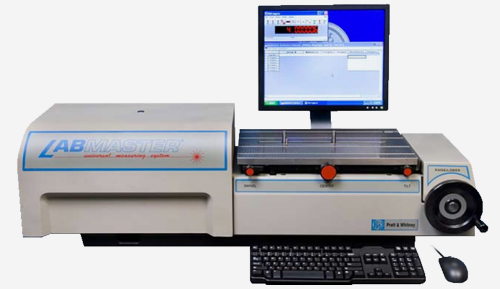
| 1992 | The LabMaster Standard & Universal Model 175 product line is introduced with 0.051 micrometer (2 millionths) accuracy utilizing laser interferometry. |
| 1996 | The Labmicrometer Model 200, 900,1600 product line is introduced for long-length measuring applications utilizing laser interferometry. |
| 1998 | Universal Supermicrometer Model 501 & 504 product line introduced. A high accuracy internal & external bench micrometer. |
| 2003 | The company became known as Pratt & Whitney Measurement Systems, Inc. and relocates to a larger facility in Bloomfield, CT. |
| 2006 | The Labmaster Universal Bearing Measuring Instrument is introduced. |
| 2008 | Pratt & Whitney Measurement Systems, Inc. is accredited to ISO/IEC 17025 by A2LA (cert# 2629.01). |
| 2009 | Pratt & Whitney Measurement Systems, Inc. introduces the External Supermicrometer Model PC bench micrometer system with 1 micro-inch resolution. |
| 2011 | Pratt & Whitney Measurement Systems, Inc. introduces the long length Labmaster Universal Model 1000A (Automatic). |
| 2012 | Pratt & Whitney Measurement Systems, Inc. introduces the long length Labmaster Universal Model 1000M. |
| 2013 | Pratt & Whitney Measurement Systems, Inc.'s calibration laboratory expands scope of accreditation of ISO/IEC 17025 by A2LA (cert# 2629.01). |
| 2016 | Pratt & Whitney Measurement Systems, Inc. announces CE Mark approval for the long length Labmaster Universal Model 1000A & 1000M. This follows previous CE Mark approval for the Labmaster Universal Model 175, External Supermicrometer Model "C", and Universal Supermicrometer Model 501 & 504. |
| 2019 | The Electrolimit Indicator is introduced for short-range contact comparison utilizing a breakthrough design in transducer technology. |
| 2019 | The Electrolimit Comparator is introduced for short-range measuring applications such as gage block calibration, ball/sphere measurement, and precision part inspection. |
| 2022 |
Pratt & Whitney Measurement Systems, Inc. introduces the MasterXRF Instrument utilizing X-ray fluorescence technology for inline analysis of plating solutions. |
| 2024 |
Pratt & Whitney Measurement Systems, Inc. awarded Aerospace Ultra-precision Metrology Instrument Supplier of the Year 2025. |
| 2025 |
Pratt & Whitney Measurement Systems, Inc. joined members of Congress as well as state and community leaders for a building dedication ceremony and plaque unveiling, commemorating Pratt & Whitney’s original location in Hartford Connecticut. |
| 2025 |
Pratt & Whitney Measurement Systems, Inc. joined industry leaders to celebrate the unveiling of the new Pratt & Whitney Innovators Exhibit at the New England Air Museum in Windsor Locks, Connecticut. The gala featured a historic highlight: a 12‑inch Pratt & Whitney Standard Measuring Machine (circa 1895) proudly on display.
|
1 Frederick B. Rentschler, An Account of Pratt & Whitney Aircraft Company 1925-1950, (personal memoirs, a typewritten account-Spring 1950), 14. para 1.
2 Frederick B. Rentschler, An Account of Pratt & Whitney Aircraft Company 1925-1950, (personal memoirs, a typewritten account-Spring 1950), 14. para 2.
|
Pratt & Whitney History |
|
|
The history of the company from 1860 to 1930 is detailed in the book Accuracy for Seventy Years 1860-1930. |
|
 Pages 1 to 19 Pages 1 to 19 |
 (1.00M) (1.00M) |
| Pages 21 to 53 |
(4.54M) |
| Pages 55 to 71 |
(4.21M) |
| Pages 73 to 93 |
(4.15M) |
| Pages 95 to 118 |
(4.69M) |

 Free USB
 Product &
 Celebrating